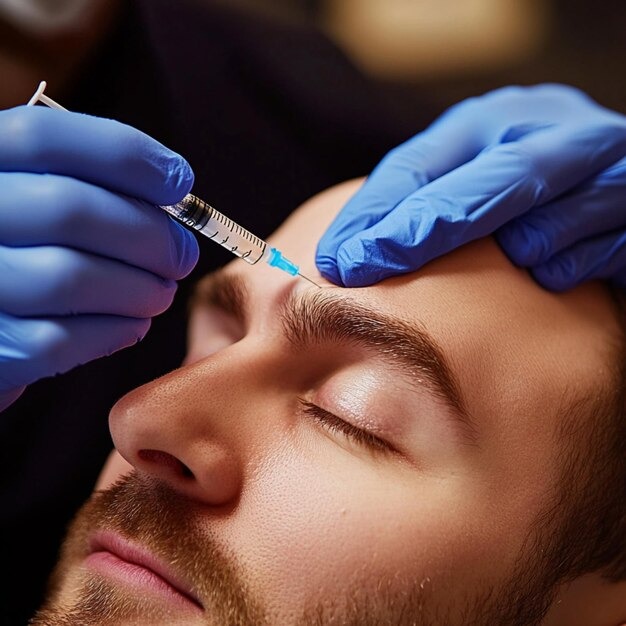
Essential Mens Clinic Do Not Offer Replacement Therapy. For Erectile Dysfunction associated with see P Shot®, EWST and Botulinum Toxin Type A.
What is ?
is the most important androgen (male sex hormone) in men and plays a key role in reproductive and sexual function. is responsible for producing the physical characteristics of male puberty such as penis development and testicular growth, and for those features typical of adult men such as facial and body hair. also stimulates cells in the testes to assist in the production of sperm.
In addition is important for the good health of many non reproductive tissues in the body. It plays an important role in the growth of bones and muscles, and affects mood, sex drive and certain aspects of mental ability.
How is production controlled?
Luteinizing hormone (LH) and follicle stimulating hormone (FSH) are the two important messengers made by the pituitary gland in the brain that act to trigger testis function. Once stimulated with LH, the cells in the testes produce .
What is deficiency?
(or androgen) deficiency is when the body is unable to produce enough for the body to function normally. Although not a life-threatening condition, it can have a major affect on quality of life.
How common is deficiency?
deficiency affects about one in 200 men under 60 years of age. It is usually the result of genetic disorders (e.g. Klinefelter’s syndrome), damage to the testes (infection, trauma, medications, chemo/radiotherapy), undescended testes, or rarely, a lack of hormones produced by the brain (e.g. Kallman’s syndrome or disorders of the pituitary gland).
The number of men over 60 years who are deficient is uncertain with some estimates suggesting that one in 10 older men may have levels. The ageing process, medical illnesses and obesity all affect levels.
Do all men get levels as they age?
Unlike women, whose oestrogen levels fall rapidly when they go through menopause, men’s levels fall much more gradually and over a longer period of time. Furthermore, not all men are affected by a drop in levels.
levels in men are at their highest between the ages of 20 to 30 years; then begins to fall by about a third between the ages of 30 to 80 years. Some men will experience a greater drop in these hormone levels. However, many men aged over 80 years will have relatively normal levels.
What are the symptoms and signs of deficiency?
The signs of are different depending on the age when levels fall below the normal range. Many of the symptoms and signs are
nonspecific and may occur with other medical illnesses and in other circumstances (e.g. physical or psychological stress).
Showing these symptoms therefore does not automatically mean that such men should have treatment.
Early Childhood
• Penis and testes do not grow to expected size
Adulthood
• Mood changes (low mood and irritability)
• Poor concentration
• Low energy
• Reduced muscle strength
• Longer time to recover from exercise
• Low interest in sex (decreased libido)
• Difficulty getting and keeping erections
• Hot flushes, sweats
• Breast development
• Osteoporosis (thinning of bones)
• Low semen volume
• Reduced beard or body hair growth
Later life (after 60 years)
• Easy fatigue
• Poor muscle strength
• Low mood and irritability
• Poor concentration
• Low interest in sex (decreased libido)
• Osteoporosis (thinning of bones)
• Difficulty getting and keeping erections
How is deficiency diagnosed?
A number of steps are involved in diagnosing deficiency:
1. A full medical history and physical examination to confirm deficiency and to identify a possible cause
2. At least two blood samples on different days to measure hormone levels (blood is taken in the morning when levels are highest)
3. Tests to determine the presence or absence of medical conditions known to affect the testes or pituitary gland (blood tests, chromosome testing, CT or MRI of the pituitary gland).
What is the ‘normal’ reference range?
A reference range is used as a guide by testing laboratories and doctors to decide whether a man’s hormone levels are considered normal or whether treatment is needed. Ninety-five per cent of healthy people have hormone levels that fall within a standard reference range. However, a few healthy people (5 per cent) have levels outside the range.
The ‘normal’ reference range for healthy, young adult men is considered to be between about 8 and 27 nanomolar (approximately). Guidelines for the use of have been developed, and the Pharmaceutical Benefits Scheme (PBS) uses these guidelines to decide when to subsidise the cost of therapy.
How is deficiency treated?
deficiency is treated by giving in doses that return the levels in the blood to normal. There are a number of forms of therapy available in Australia.
What are the main forms of therapy?
injections, implants, oral capsules, skin patches, creams and gels are available . is prescribed for men with clinically proven lowered levels.
Patient convenience, familiarity and cost can decide the type of treatment prescribed. Once started, this treatment is usually continued for life and needs to be checked regularly by a qualified doctor with monitoring of the prostate, haematocrit (blood count), cholesterol levels and bones (for osteoporosis).
Who should NOT receive therapy?
The presence of other medical conditions may influence whether or not a man with deficiency should be treated with therapy. A particular concern of therapy is the potential worsening of prostate disease. treatment should not be started in older men before the possibility of prostate cancer or severe non-malignant prostate disease has been considered.
Men with breast cancer should also not receive therapy. Men with sleep apnoea or heart failure need a thorough assessment before being considered for replacement therapy.
therapy should also not be used to treat low hormone levels caused by other treatable conditions, such as obesity or depression. These underlying problems should be corrected first as hormone levels may return to normal and therapy may never be needed.
What are the side-effects of therapy?
therapy can increase prostate growth, possibly making any prostate cancer, if present, worse. should not be prescribed for men with prostate cancer. It may also make symptoms of benign prostatic hyperplasia (BPH, prostate enlargement) worse. Other side-effects such as mild acne, weight gain, breast development, male-pattern hair loss and changes in mood are uncommon.
Does ‘male menopause’ exist?
Ageing men who have symptoms that have been associated with deficiency are sometimes described in the media as having “male menopause”or “andropause”. Terms such as these are not accurate.
Menopause is the stopping of menstrual cycles (periods) which can only happen in women. levels in men do not stop suddenly but slowly drop with age. Therefore, the hormonal changes associated with ageing in men and women are diagnosed and treated differently.
Can anything be done to prevent deficiency?
There are no known ways to prevent true deficiency caused by damage to the testes or pituitary gland.
However, a healthy lifestyle and management of other health problems can improve production in men whose lowered hormone levels are due to other illnesses or conditions. Treatment should be directed towards these other illnesses in the first instance.
Essential Mens Clinic Do Not Offer Replacement Therapy. For Erectile Dysfunction associated with see P Shot®,
EWST and Botulinum Toxin Type A.
c/o Monash Institute of Medical Research Victoria Australia Andrology
Australia is an initiative funded by the Australian Government Department of Health and Ageing.
This information has been provided for educational purposes only. It is not intended to take the place of a clinical diagnosis or proper medical advice from a fully qualified health professional. Andrology Australia urges readers to seek the services of a qualified medical practitioner
for any personal health concerns