Male Pattern Hair Loss
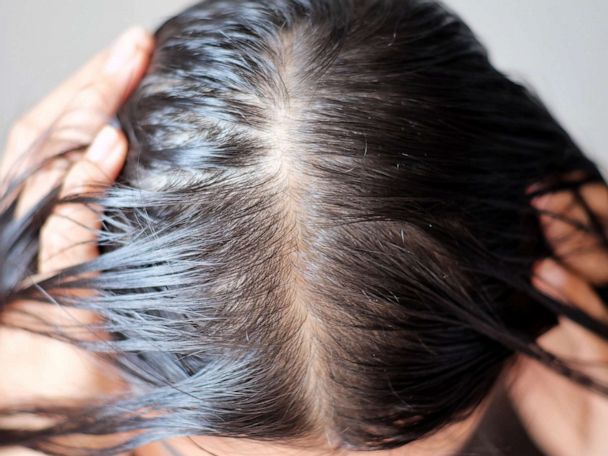
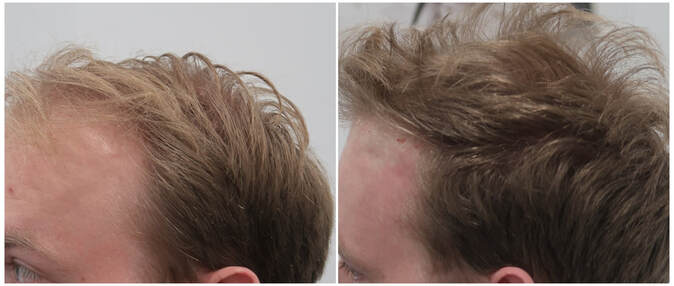
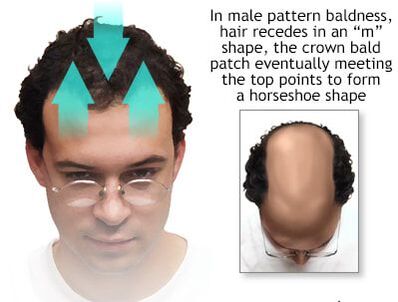
Male pattern hair loss (also known as androgenetic alopecia) is a progressive hair thinning condition and is the most common type of hair loss in men. Male pattern hair loss typically begins at the forehead, with the hairline gradually receding along the sides to form an ‘M’ shape. The remaining hair may become finer and shorter, with hair at the crown (back) of the head also beginning to thin. The patient below Male 20s after 6 x PRP hair treatments.
What Causes Hair Loss?
There are many different causes of hair loss including certain illnesses (including disorders of the immune system), stress as a result of major surgery, chemotherapy, radiotherapy, hormonal problems, fungal infections, and as a side-effect of some medications. Scarring from burns can also cause permanent hair loss. Hair loss in patches, sudden hair loss, breaking of hair shafts or hair loss associated with redness, scaling or pain are likely to be caused by specific health conditions.What Causes Male Pattern Hair Loss?
While it is not completely understood why the hair follicles on men’s heads stop producing new hairs, the male hormone DHT (dihydro) is thought to play a part. , the most important male sex hormone (androgen) in men, is responsible for the growth of bone and muscles, sexual function and for producing physical characteristics in men including facial and body hair. In the body is converted to DHT by an enzyme (5-alpha reductase). DHT acts on different organs in the body including the hair follicles and cells in the prostate. For reasons we don’t understand, hair follicles sometimes become more sensitive to DHT, slowing down hair production and producing weaker, shorter hair. Sometimes hair growth stops completely. It is not clear why different hair follicles are affected at different times, making the balding process gradual or why only scalp hairs are affected.
How Common Is Male Pattern Hair Loss?
The majority of men will experience some form of hair loss in their lifetime. For men between the ages of 20 and 45 who start to lose scalp hair, there is a 95 per cent chance they are experiencing male pattern hair loss. Male pattern hair loss varies from population to population due to genetic background.
What Is The Emotional Impact On Men Experiencing Hair Loss?
While hair loss is a normal part of the ageing process for most men, it can be distressing for some, particularly if it is excessive or happens at an early age. Men experiencing hair loss can feel less confident, less attractive and may think it makes them look older.
The amount of hair loss can vary among men and is usually influenced by an individual’s genetic make-up. In severe cases, the receding forehead hairline may eventually extend to the thinned crown, leaving a horseshoe pattern of hair around the sides of the head.
 | 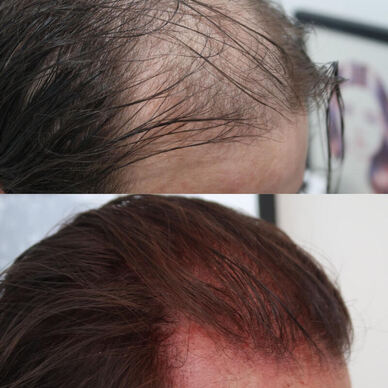 Male in 40s after 6 x PRP treatments Male in 40s after 6 x PRP treatments |
What Are The Available Treatments
Topical Hair Loss Solution
Minoxidil, applied topically, is widely used for the treatment of hair loss. It is effective in helping promote hair growth in people with androgenic alopecia regardless of sex. About 40% of men experience hair regrowth after 3–6 months. Minoxidil must be used indefinitely for continued support of existing hair follicles and the maintenance of any experienced hair regrowth.
Oral Hair Stimulating Medication
Finesteride is an oral medication that works by blocking the conversion of to DHT. The hair follicles are then not affected by DHT and can enlarge back to normal. About two in three men who take Finasteride every day experience some hair re-growth. Finesteride must be used indefinitely for continued support of existing hair follicles and the maintenance of any experienced hair regrowth.
Red Light Therapy
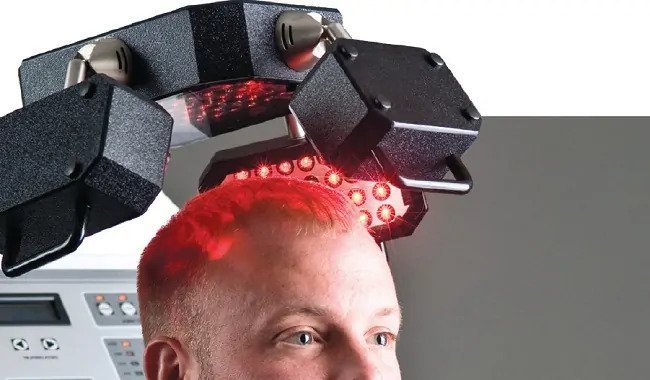
The hair growth cycle consists of three phases: growth (anagen phase), resting (telogen phase) and shedding (catagen phase). Hair loss in androgenetic alopecia depends on a derivative in the skin, dihydro (DHT). Low level laser therapy increases blood flow in the scalp and stimulate metabolism in catagen or telogen follicles, resulting in the production of anagen hair.
PRP Platelet Rich Plasma
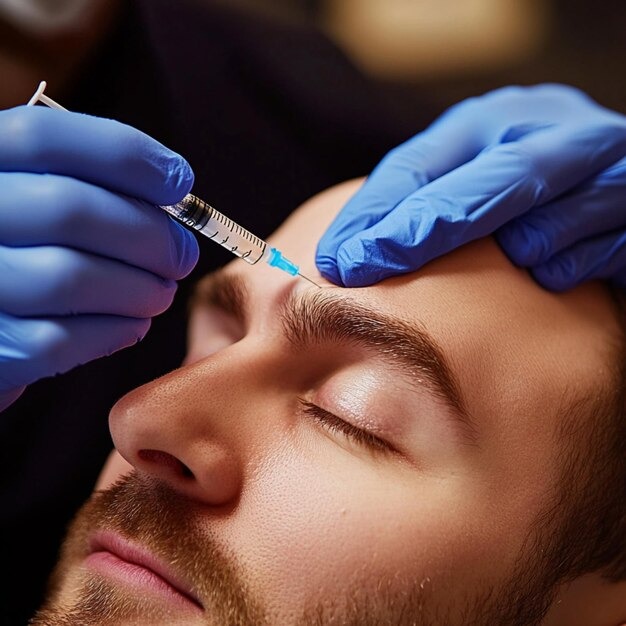
The use of Platelet Rich Plasma (PRP) is not new; it has long been recognized for it’s accelerated wound healing properties in such applications as surgery and sports injuries. This technology is now being used for cosmetic enhancement with outstanding results. PRP is a bio active stimulator using cells derived from your own blood, these are then re-injected into the scalp to stimulate cells.
Lifestyle ChangesMany peer review studies and papers have been written underpinning the importance of positive Lifestyle Changes to improve hair condition, growth and conversely diminish hair loss. below is a summary of the most important.
1. Eat a well balanced diet and in particular avoid highly processed carbohydrate diets which induces release of insulin from the pancreas.
2. Get your body fit and active.
3. Get your mind fit and active. Reduce stress levels
4. Smoking, avoid or stop! Smoking accelerates hair loss.
5. Consider further dietary supplementation.
6. Manage reversible causes such as hair loss due to dandruff or fungal scalp irritations, with topical antifungal shampoos.
PRP Treatment Before & After
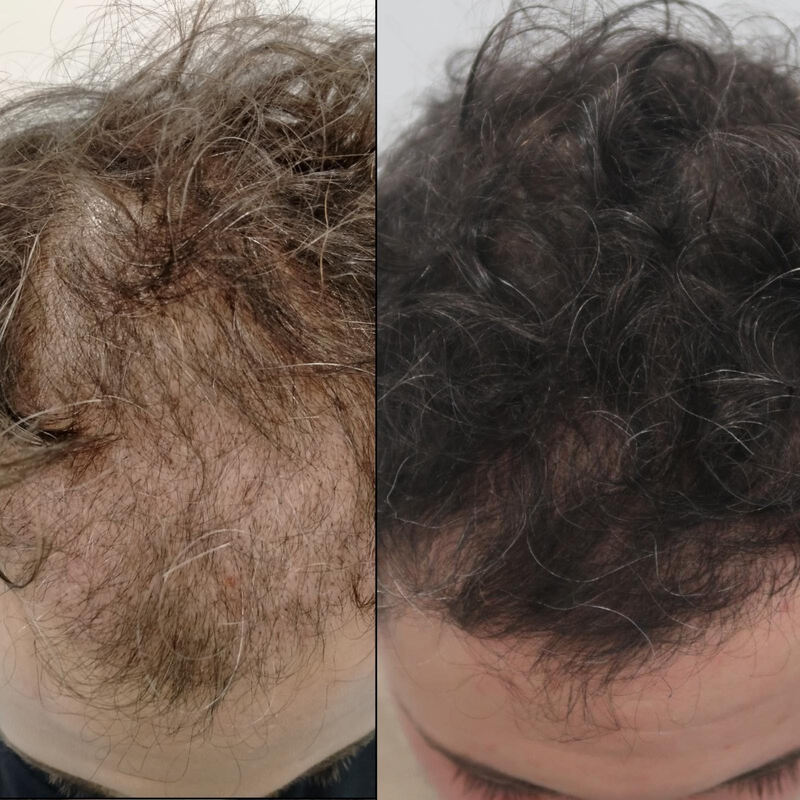 38 year old male, 6 x PRP treatements 38 year old male, 6 x PRP treatements | 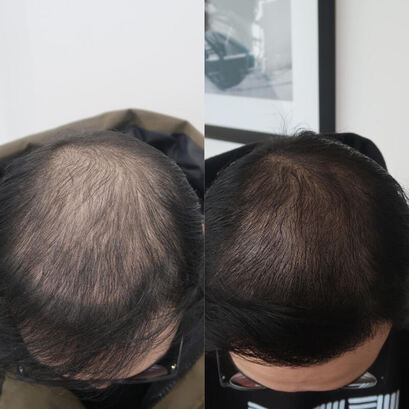 39 year old male, 6 x PRP treatments. 39 year old male, 6 x PRP treatments. | 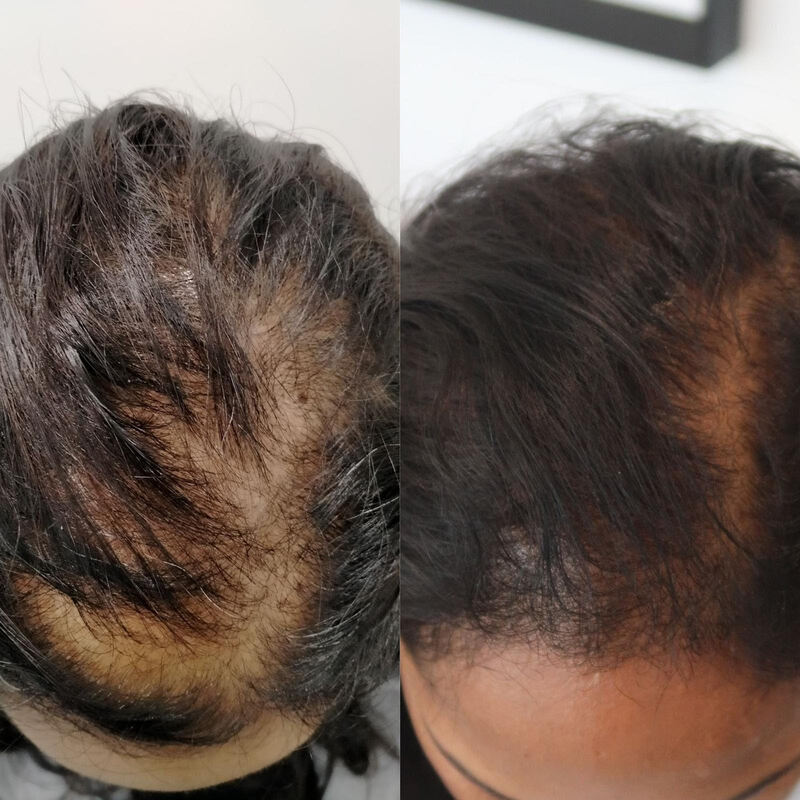 Female 50s, 6 x PRP hair treatments. Female 50s, 6 x PRP hair treatments. |