
Most men suffering from erectile dysfunction may have vascular problems affecting the vessels that supply blood to the cavernous bodies of the penis, resulting in a decreased ability to develop and maintain an erection.
The end result is an inadequate blood-flow followed by premature draining of an already reduced amount of blood from the cavernous bodies, meaning an erection is not achieved.
Shockwave Therapy has been demonstrated to be one of the treatments available to help ED of this type.
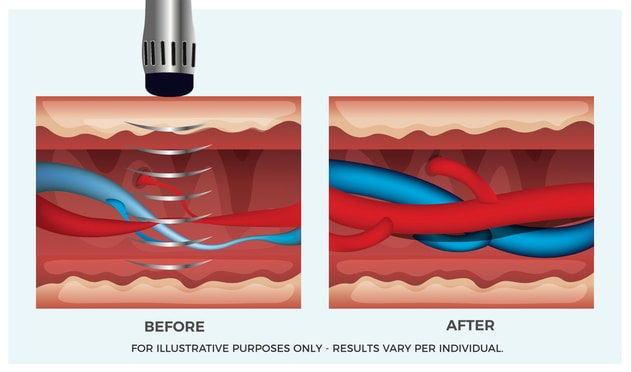
Shockwave Treatment of Erectile Dysfunction
Ilan Gruenwald, Boaz Appel, Noam D. Kitrey, and Yoram Vardi
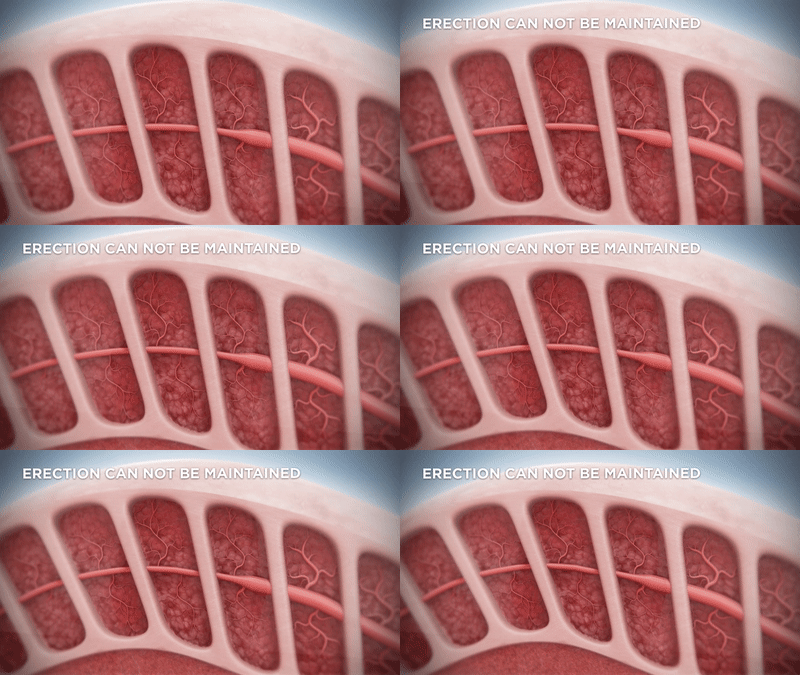
A common cause of erectile dysfunction is related to blood flow to the penis. Good blood flow is needed to develop and maintain an erection..
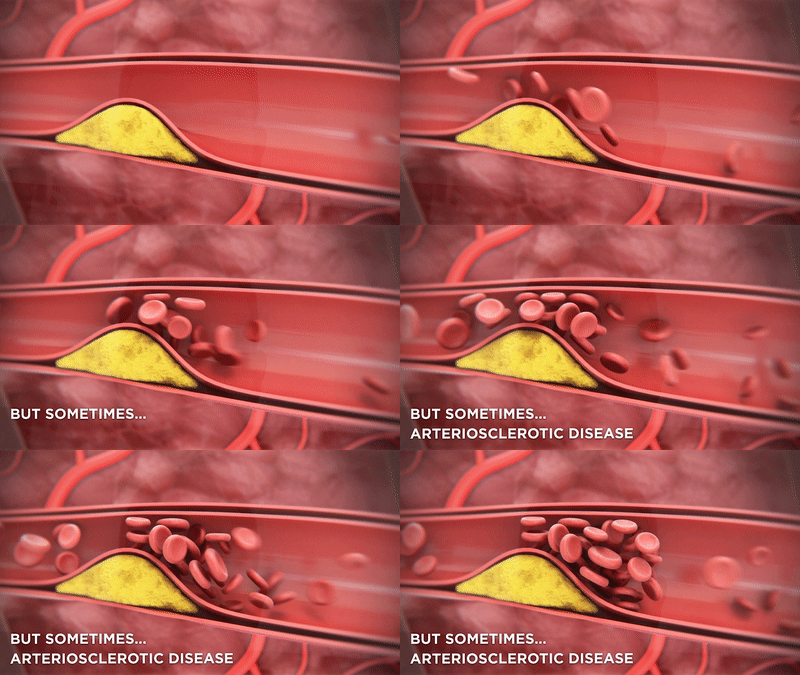
Certain risk factors such as Hypertension, Obesity, Smoking or Diabetes leads to narrowed blood vessels across the body including those connected to the penis. This in turn leads to an overall decrease in blood flow, lower than required to develop and maintain erections.
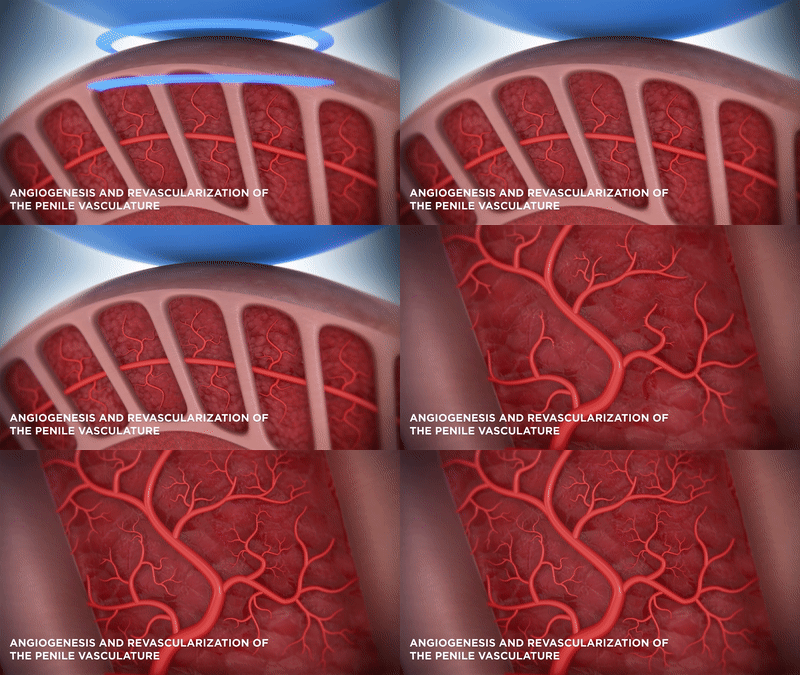
EWST involves the use of painless, low energy shockwaves to improve tissues and vessels in the body. The device is placed against the penis and gentle shockwaves are sent to the area. The shockwaves cause cells to release growth factors, stimulating tissue repair and blood vessel growth.
Growth Factor function is inhibited by the following, therefore.
DO NOT SMOKE Do not use illegal drugs, avoid excess alcohol. Do not take salicylic acid (Aspirin) and Anti-inflammatory drugs such as Nurofen® and Voltaren® for two weeks before and six weeks after treatment.
If you supplement with omega 3 fatty acids (fish, krill or flax seed oil), stop these during the same period.
Please refer to Extracorporeal Shockwave Therapy Data Information supplied for evidence-based studies on Pre-Treatment Advice.
Studies have shown that a mean
average of 60% of patients will have improvements
in their IIEF score by more than 5 points, and 70% of patients with have an improvement in the Erectile Dysfunction Inventory of Treatment Satisfaction (EDITS) score by 50%
In severe cases of ED where patients could not get an erection even with medicines for their ED (i.e. PDE5 inhibitors),
ESWT improved the haemodynamics of penile function in a subgroup of these men, such that PDE5 inhibitors were now able to produce an erection.
Overall, it is fair to say around 60-70% of people will benefit from this treatment. Of course, 60-70% is not a 100% and this success rate has to be balanced against the cost of the treatment.
Erectile dysfunction (ED) is a common sexual disorder. It can be defined as the inability to achieve and/or maintain an erection sufficient for satisfactory sexual intercourse. This can have a negative effect on the quality of life of men and their partners. While most often associated with older men, ED affects a significant proportion of men, starting in middle age.
Extracorporeal shock wave therapy has been used for the treatment for erectile dysfunction (ED) of vascular origin for almost a decade. When treating ED with shock wave therapy, low-intensity shock waves are applied to different treatment zones on the penis and on the perineum (crura).
Several studies have investigated the effectiveness of low-intensity extracorporeal shock wave therapy (LiESWT) on ED. Several systematic reviews, which are the highest level of evidence according to the Oxford Centre for Evidence-based Medicine, concluded that LiESWT improves ED measured by the International Index of Erectile Function (IIEF) and Erection Hardness Score (EHS). 7,10,11,12 A systematic review over 14 studies including 833 patients stated that LiESWT »may have the potential to be the first-choice noninvasive treatment for patients with ED. 7 A prospective, randomized, double-blind, placebo-con- trolled trial 1 from 2014 showed that 57% of the men who were treated with LiESWT were able to obtain an erection after treatment and to have sexual intercourse without the use of medication. An Australian study 2 from 2015 investigated the efficacy, safety and patient satisfaction rate after LiESWT: Most patients reported an improvement in the IIEF-5 score by 5 points (60%) and in the Erectile Dysfunction Inventory of Treatment Satisfaction (EDITS) score by > 50% (70%). Most patients were satisfied (scoring 4 out of 5; 67%) and would recommend the therapy to their friends (80%). The efficacy of LiESWT has also been confirmed in animal models, for example in a study 8 published in late 2017, in which rats with a diabetes mellitus-induced ED were treated with shock waves
Ready to take the first step towards a more confident you?
Contact Essential Mens Penis Enlargement NZ today to book your consultation